Your hormones aren't broken. They're asking for something different.
PCOS was recently renamed PMOS polyendocrine metabolic ovarian syndrome) to better reflect what it actually is: a full-body hormonal and metabolic condition, not just an ovarian one. Same condition, new name, and it responds directly to how you eat, move, sleep, and manage stress.
What it is?
PCOS / PMOS
A hormonal and metabolic condition affecting how the ovaries function, typically involving higher androgen levels, irregular or absent ovulation, and insulin resistance.
It's one of the most common endocrine conditions in women of reproductive age, and it's a lifelong condition that continues to affect metabolic health well beyond the childbearing years.
The basics
Same condition. New, more accurate name.
PCOS was recently renamed PMOS, polyendocrine metabolic ovarian syndrome, by international consensus. The new name drops the focus on ovarian cysts and puts the spotlight where it belongs: on the hormonal and metabolic system driving the condition.
How it shows up
Common symptoms
Irregular or missed periods, acne, unwanted hair growth, thinning scalp hair, weight changes, and difficulty losing weight even with consistent effort.
Many women also experience mood changes, fatigue, and fertility challenges tied to the same underlying hormonal and blood sugar patterns.
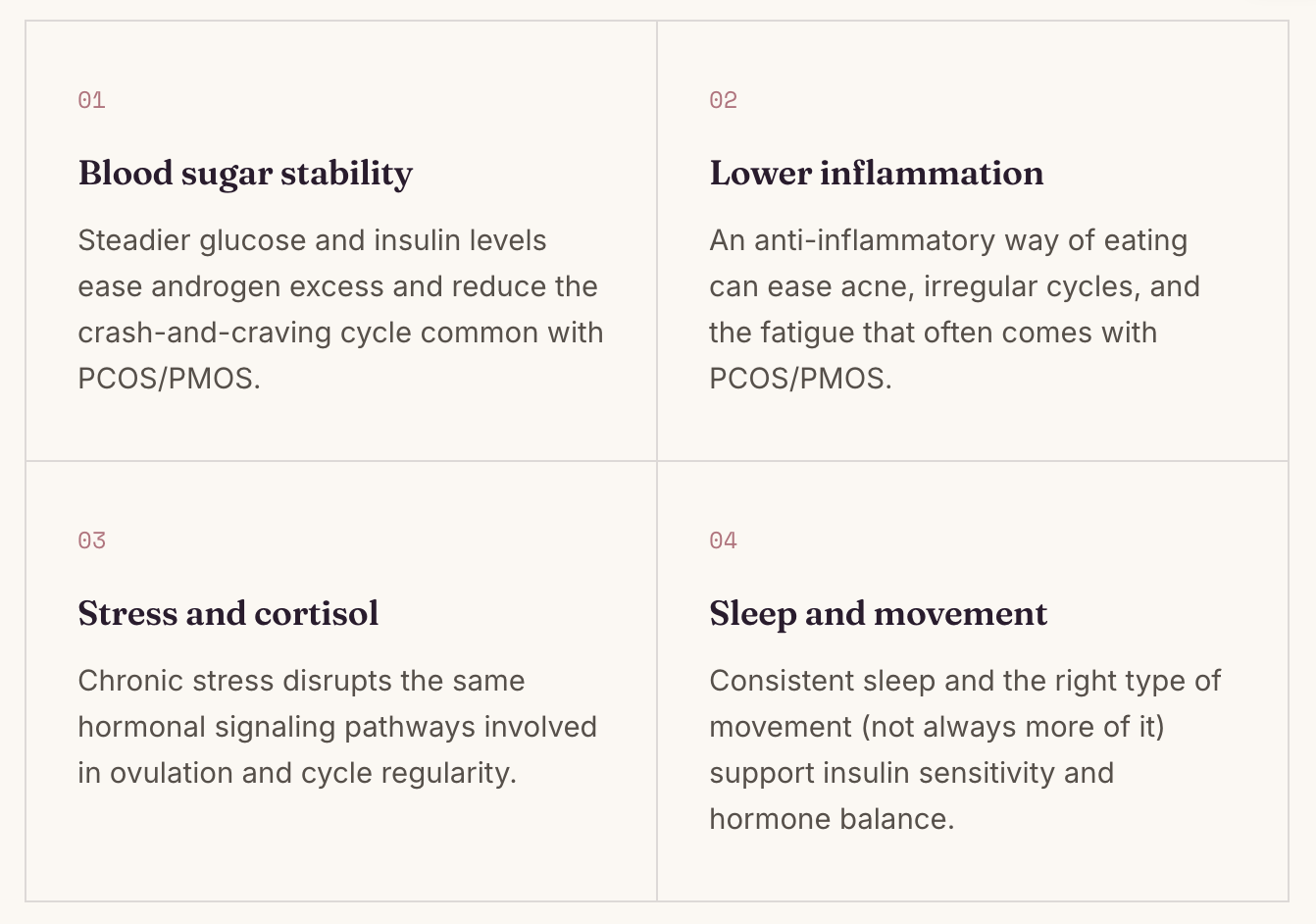
The common thread: whatever you call it, PCOS/PMOS is highly sensitive to blood sugar swings, chronic stress, and inflammation. Stabilize those three levers, and symptoms tend to soften, sometimes dramatically.
Why it matters
Nutrition and lifestyle aren't extras. They're the treatment.
Medication can be an important part of managing PCOS/PMOS, and nutrition and lifestyle changes work alongside it, targeting the blood sugar, inflammation, and stress patterns that influence how you feel day to day. Together, they give you a fuller toolkit for managing symptoms.
You don't need to overhaul your entire life. You need the right few changes, in the right order, for your body.
Next step
Let's figure out what your hormones actually need.
Book a free call, and we'll talk through your symptoms, your history, and what a nutrition and lifestyle plan built for your body could look like.